
Fresh or Frozen Fruit? What We Learned About the Carbon Footprint of Both
A container of moldy blueberries sent us down a rabbit hole about fresh vs frozen fruit, carbon footprints, and why the freezer aisle might actually be the greener choice.
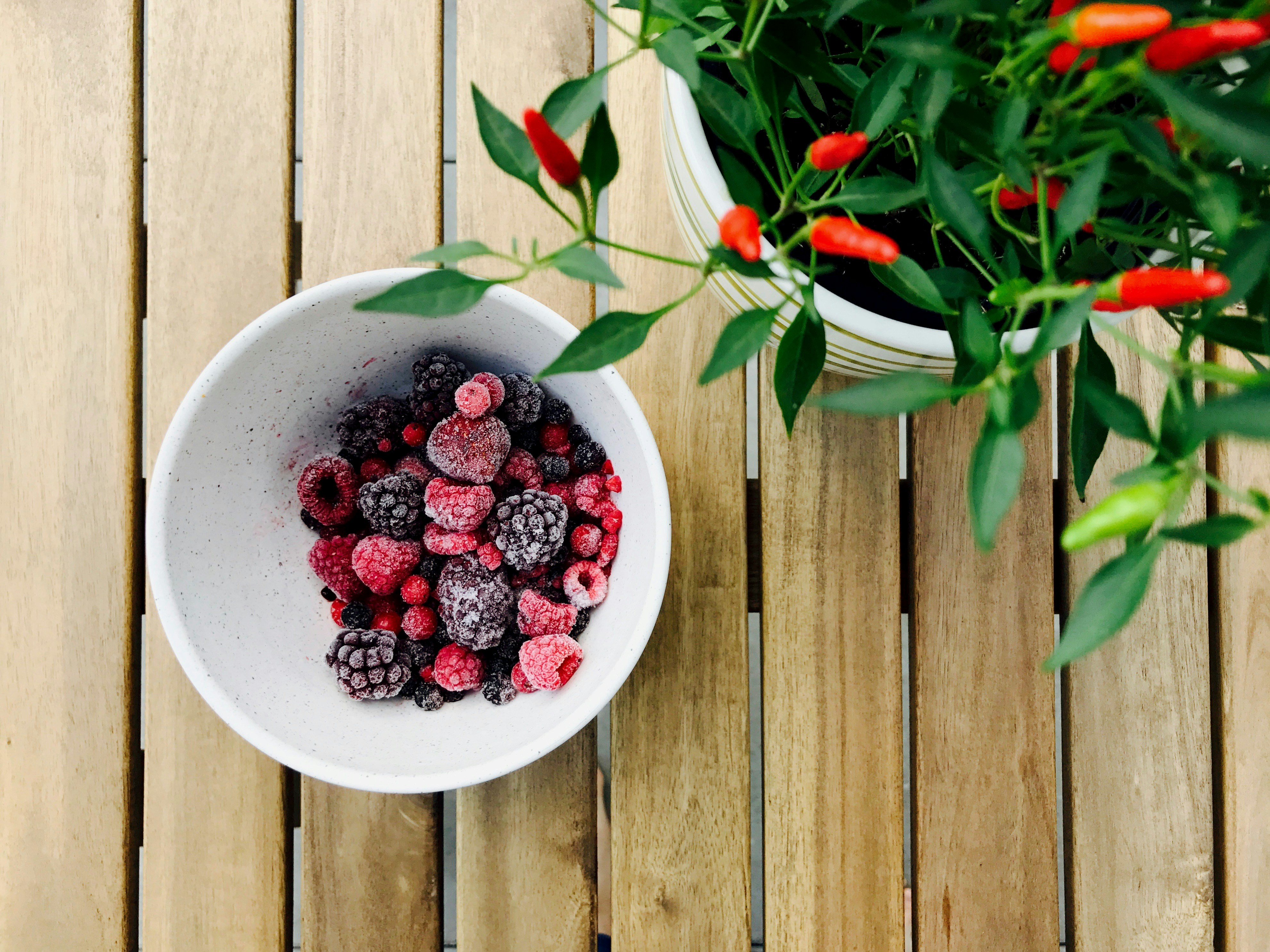
My wife opened the fridge the other morning, pulled out a container of blueberries we’d bought maybe four days ago, and just held it up without saying anything. You know that look — the fuzzy gray-green layer of mold covering what used to be perfectly good fruit is doing all the talking. We both just stood there feeling that specific guilt you get when you think about everything that went into getting those blueberries to your fridge — the farm, the truck, the plastic clamshell, the refrigeration — only for them to end up in our kitchen trash because we forgot they were behind the yogurt.
That moment sent me down a rabbit hole about fresh versus frozen fruit. We already buy a lot of frozen — our freezer drawer is basically the frozen mango and blueberry drawer at this point, raided every morning for smoothies and oatmeal. But I’d always had this vague sense that fresh was the “better” choice and frozen was the shortcut. Turns out that feeling is pretty much backwards.
The Waste Problem
Roughly a third of all food produced globally goes to waste before anyone eats it. Fresh fruits and vegetables are worse than that average because they’re fragile, they ripen on their own schedule, and they have this incredibly narrow window between “not quite ready” and “mold city.” We’ve all done the math on raspberries that look like a biology experiment by Wednesday, bananas that went from green to black while you were living your normal life, and grapes that quietly became something unidentifiable at the back of the fridge.
Frozen fruit sidesteps all of this. It gets flash-frozen within hours of being picked, then sits in your freezer being perfectly fine until you need it. You take out what you need, put the bag back, nothing is racing against the clock. The waste reduction at every stage — farm, shipping, store, your kitchen — is probably frozen fruit’s single biggest environmental advantage, and it’s the one I wasn’t expecting.
The Carbon Math
If the fresh fruit you’re buying is local and in season — actually local, from a farm you could drive to — then its carbon footprint is about as low as it gets. Strawberries from a farm stand in June, in a place where strawberries grow in June, that’s the dream scenario.
But let’s be honest about how most of us buy fruit most of the year. The “fresh” strawberries in the grocery store in January grew in a different hemisphere and traveled an absurd distance to be there. Air freight uses about 24 times more energy than rail transport, according to the Sierra Club. So that January container might carry a significantly larger carbon footprint than a bag of frozen strawberries that were picked in season, frozen near the farm, and shipped by rail because they weren’t racing spoilage.
A study in Environmental Research Letters found that out-of-season fresh produce pretty consistently carries a heavier environmental burden than frozen, because getting it to you means either importing from far away or growing it in energy-intensive heated greenhouses. Frozen fruit gets harvested at peak season and preserved right there. Yes, the freezing process uses energy, but research suggests that within about 100 days of freezing, the emissions are more than offset by waste reduction and not flying berries across the equator.
The Packaging and Nutrition Surprise
People assume frozen is worse on plastic, but a 16-ounce package of fresh strawberries uses about 31 grams of plastic in its clamshell, while a 16-ounce bag of frozen uses about 12 grams. Less than 10% of plastic packaging gets recycled either way, so neither wins awards here.
On nutrition — frozen fruit is comparable to fresh, and sometimes better. It gets frozen at peak ripeness, locking in nutrients. Fresh fruit that traveled across an ocean and spent four days behind your yogurt has been slowly losing vitamins the entire time. One study found that out-of-season shipped broccoli retained only half the vitamin C of locally grown in-season broccoli. “Fresh” describes when it was picked, not what it looks like nutritionally by the time it reaches your kitchen.
What We Actually Do Now
We stopped treating this as fresh versus frozen and started thinking about it as fresh and frozen depending on the time of year.
We buy fresh when fruit is local and in season — farmers’ market strawberries in June, peaches in peach season, apples in fall. When it’s abundant and local, fresh wins on every front. If we buy too much, we freeze it ourselves.
We buy frozen when the fruit we want isn’t in season locally (most of the year), when we need it for smoothies and baking, or when we look at the week ahead and know that container of fresh fruit is going to end up as another sad fridge exhibit. We’ve stopped feeling weird about the frozen aisle and it was kind of freeing.
And we avoid out-of-season fresh stuff that flew in from another continent — high carbon footprint, high cost, often mediocre quality because it was picked underripe to survive the trip, and decent odds we’ll waste some anyway.
A freezer stocked with frozen berries picked in season and flash-frozen near the farm is, a lot of the time, genuinely better for the planet than a fridge full of “fresh” fruit that traveled halfway around the world and may or may not survive until Thursday. That moldy container of blueberries my wife held up the other morning was kind of a turning point — a small, gross, surprisingly educational one.
Sources:
- Sierra Club — What’s Better for the Environment, Fresh or Frozen?
- TerGo — Eating Fresh Produce vs. Frozen: What’s the Carbon Deal?
- Green SXM — Fresh vs Frozen Berries: Which Are Better for the Environment?
- Environmental Research Letters — Modeling the Carbon Footprint of Fresh Produce
- ScienceDirect — The Carbon Footprint of Fruits: A Systematic Review
- UNEP — Food Waste Index Report 2024