
The Greenest Way to Do Laundry (Without Buying Anything New)
Small changes to how your family does laundry can cut energy use by up to 90%. Here's exactly what to change and in what order.
With kids in the house, we do a lot of laundry. A lot. Between school uniforms, sports clothes, the shirt someone got sofrito on at dinner, and the mystery stains that appear on things that were clean this morning — the machine runs constantly.
I never thought of laundry as an environmental thing until I sat down and looked at what it actually costs — in money and energy — over the course of a year. What I found surprised me. And the changes we made were so small that I’m almost embarrassed it took us this long.
The one change that makes the biggest difference
Heating the water. That’s it. About 90% of the energy your washing machine uses goes to heating water — not the machine running, not the spinning, just heating the water.
Switch to cold and you immediately cut your laundry’s energy use by roughly 90% per load. Not 10%. Ninety.
I was skeptical. We have some seriously dirty clothes in this house. But modern cold-water detergents are formulated specifically for this and they work. I haven’t run a hot cycle in over a year for regular laundry. The only exception is when someone’s been sick — then I’ll run the bedding on warm. Everything else is cold.
Just change the default temperature on your machine right now. That’s the whole first step.
Wait for a full load
We used to run the machine whenever a basket got full — even if it was only half full. Now we wait. A half-full machine uses almost the same water and energy as a full one, so running fewer loads is just efficient in every direction.
Sometimes this means wearing the same jeans twice, which, honestly, we should all be doing anyway.
Switch your detergent
We used to buy the big plastic jugs of liquid detergent. Every few weeks, another jug. We switched to laundry strips — they’re paper-thin sheets you throw straight in the drum. Zero plastic packaging, nothing to measure, works in any temperature. We buy them in cardboard.
The brand we use is Tru Earth. They’re not cheap per strip, but a pack lasts our family about two months. And not having to lug a heavy plastic jug home from the store every month is its own reward.
Wool dryer balls instead of dryer sheets
This was my wife’s discovery. We’d been buying dryer sheets for years — use once, throw away. She switched to a set of six wool dryer balls and we haven’t bought dryer sheets since. They reduce static, soften the clothes, and cut drying time. We put a few drops of lavender oil on them sometimes when we want that fresh-laundry smell.
The set cost about $20 and it’s been three years. The math on that is very satisfying.
Hang things to dry when you can
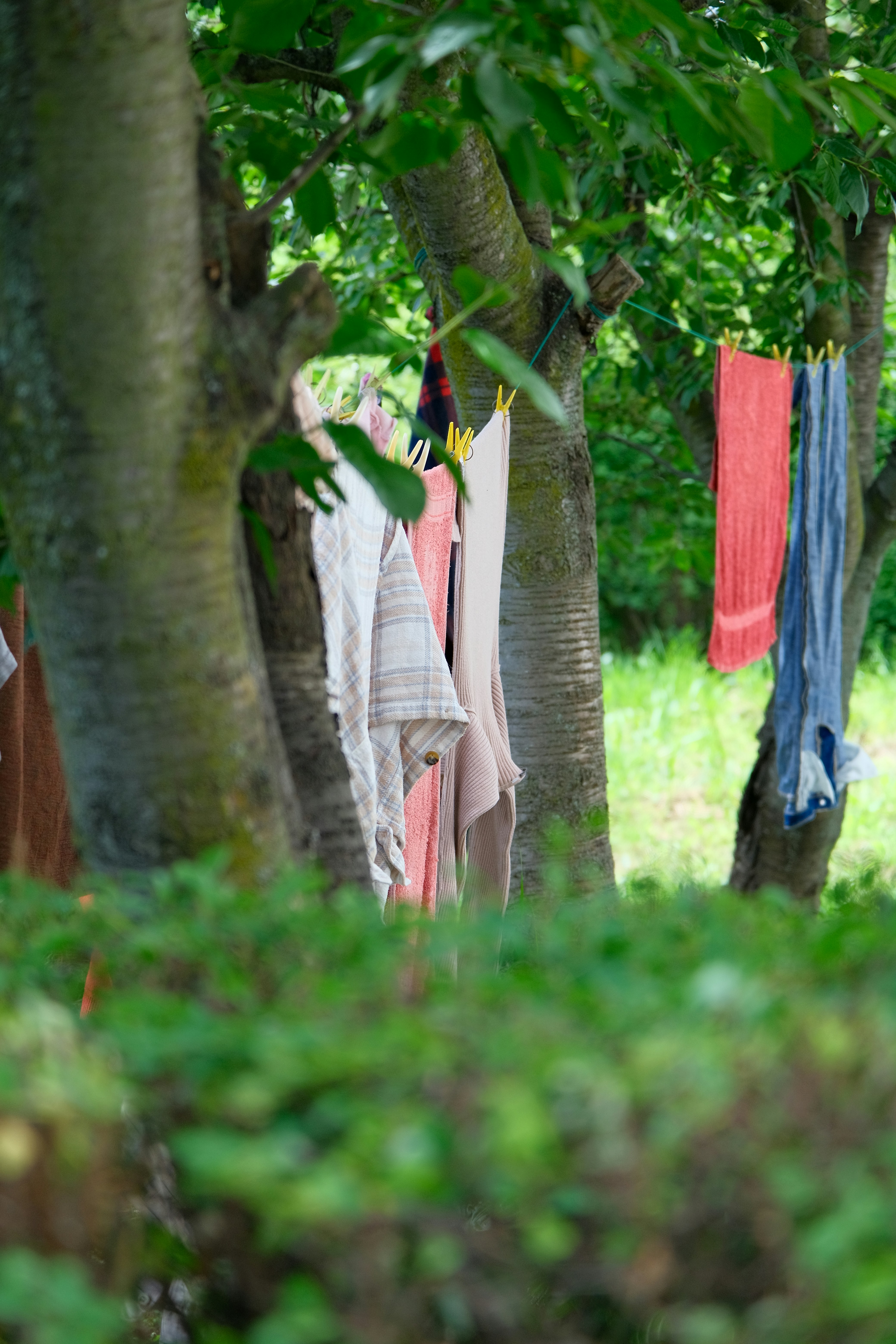
I grew up with a clothesline. Everyone did, where I’m from. Clothes went out in the morning and came in dry in the afternoon — that was just how laundry worked. A dryer would have seemed like an enormous expense for something the sun did for free. My grandmother would never in a million years have used one when there was sun available. There’s something I genuinely love about bringing that back.
We have a drying rack in the laundry room. After school clothes, shirts, anything that doesn’t need to be dry immediately goes on the rack overnight and is done by morning. The dryer is for towels, bedding, and emergencies. Running it less makes a real difference on the electricity bill.
A note on synthetic clothes
This one I only learned recently and it changed how I shop for the kids’ sports gear. Synthetic fabrics — polyester, nylon — shed tiny plastic microfibers every time you wash them. These go down the drain, through water treatment, and into rivers and oceans. Millions of them per load.
We now put the kids’ synthetic sportswear in a mesh laundry bag before washing. It’s not perfect but it catches a meaningful amount. And I’m more likely to buy cotton or natural fabrics now when I have the choice.
None of this required us to buy a new machine or change our whole routine. The cold water switch took five seconds. The rest happened gradually over a few months. Our electricity bill went down noticeably and we stopped buying plastic detergent jugs entirely. That feels like a win on every level.
What we use
Products mentioned in this article — affiliate links support this site at no cost to you.
Tru Earth Eco-Strips Laundry Detergent
Plastic-free, zero-waste detergent strips — works in any machine
Wool Dryer Balls (Set of 6)
Replace dryer sheets permanently, cuts drying time by 25%
Foldable Drying Rack
Sturdy indoor drying rack for air-drying clothes year-round
Mesh Laundry Bags (Set of 3)
Catches microplastic fibres from synthetic fabrics