
What to Do With the Stuff Your Recycling Bin Won't Take
Styrofoam, plastic bags, old electronics, bubble wrap — your curbside bin rejects all of it. Here's where these things actually go, and how to get them there without losing your mind.
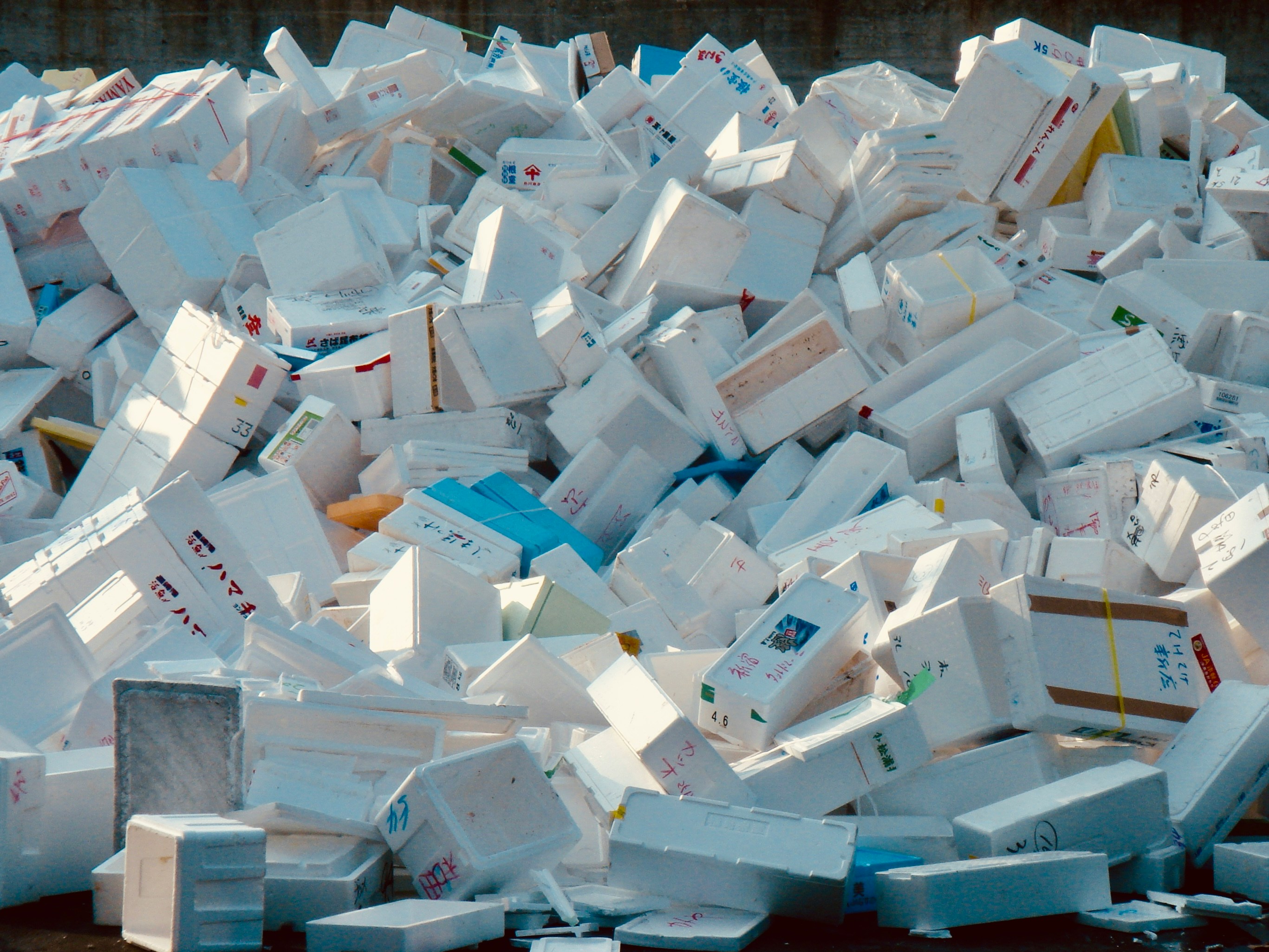
We had a piece of styrofoam sitting in our garage for three weeks. Big white block — the kind that comes packed around a piece of IKEA furniture. We knew it couldn’t go in the recycling bin. We didn’t know where it could go. So it just sat there, taking up space, while we figured it out.
Most families have a version of this. A bag of plastic bags under the sink that never leaves. A pile of bubble wrap. Old batteries in a drawer. A broken laptop nobody’s sure what to do with. These things fall into a gap — they’re too guilty to throw in the trash, but the curbside bin doesn’t want them either. So they accumulate.
Here’s what we’ve learned about actually dealing with them.
Why your recycling bin rejects this stuff
It’s not arbitrary. Plastic bags and film get tangled in the sorting machinery at recycling facilities and shut down the whole line — one plastic bag can cause a costly jam. Styrofoam (technically EPS — expanded polystyrene) is 98% air, which makes it expensive to transport relative to its weight; most facilities don’t have the equipment to compress and process it. So both get rejected, not because they can’t technically be recycled, but because the infrastructure to do it economically isn’t everywhere yet.
Knowing this made me less frustrated with the system, if still frustrated with the situation.
Plastic bags and film
This one is the most solved. Almost every major grocery store — Walmart, Target, Kroger, Safeway, Whole Foods — has a bin near the entrance specifically for plastic film recycling. The bin usually says “plastic bags” but it accepts more than that: bread bags, zip-lock bags (clean and dry), cereal bag liners, produce bags, bubble wrap, air pillows, plastic shipping envelopes.
Rules are simple: clean, dry, no food residue. If it stretches, it probably goes. If it crinkles, it probably doesn’t.
To find the nearest drop-off: plasticfilmrecycling.org has a locator. There are over 18,000 drop-off points in North America.
One honest note: there have been investigations suggesting not all of this plastic actually gets recycled — some ends up in landfill regardless. So the most reliable move is still to reduce the plastic bags coming in rather than relying on recycling them out. Reusable bags at the grocery store, buying loose produce, that kind of thing. But for the bags you already have, the store drop-off is better than the trash.
Styrofoam
This is the harder one. There’s no national program. What you have depends on where you live.
First stop: earth911.com and foamfacts.com both have zip-code locators for styrofoam drop-off facilities. Type in your zip and see what comes up. It varies enormously — some cities have permanent drop-off sites, others have nothing within a reasonable distance.
Second option: Ridwell. This is a subscription pickup service that comes to your door and collects hard-to-recycle materials including styrofoam, plastic film, batteries, lightbulbs, and more. It started in Seattle — where we use it — but now operates in eight metro areas: Seattle, Portland, San Francisco Bay Area, Los Angeles, Denver, Austin, Minneapolis, and Atlanta. And here’s the more recent development: Ridwell now has a mail-in service available to anyone in the US. You fill a bag, schedule a USPS pickup or drop it at any post office, and Ridwell handles everything from there. For families not in one of their pickup cities, this is the easiest national option for styrofoam specifically.
For foam peanuts specifically — the kind used in shipping — many UPS and FedEx stores will take them for reuse.
Batteries and lightbulbs
Batteries: Home Depot and Lowe’s both have battery recycling bins near the entrance. Call2Recycle (call2recycle.org) has a locator for drop-off points across the US — there are thousands of them, including many hardware stores and big-box retailers.
Lightbulbs: standard incandescent bulbs aren’t hazardous and can go in the trash. CFL bulbs (the curly ones) contain mercury and need to go to a recycling point — Home Depot and Lowe’s both take them. LED bulbs don’t contain mercury, but many hardware stores still take them.
Electronics
Best Buy is the most consistent nationwide option. They take almost any consumer electronics — computers, laptops, phones, cables, printers, TVs — regardless of where you bought them. Some items have a small fee, but most are free. Their recycling program is genuinely one of the most accessible in the US.
Manufacturer take-back programs: Apple, Dell, HP, and most major manufacturers have their own take-back or trade-in programs. Worth checking before you haul things to Best Buy — sometimes you get store credit.
Your local municipality probably has a household hazardous waste (HHW) facility that accepts electronics for free a few times a year. Search “[your city] household hazardous waste” and see what comes up.
When none of that works: TerraCycle
TerraCycle is an organization that has built recycling programs around things that have no other path. They run two kinds of programs:
Free programs: Specific to certain product categories — coffee capsules, cosmetics, chip bags, contact lenses, cigarette butts. Sponsored by brands. You sign up, collect the items, and ship them for free. Worth checking terracycle.com to see if anything in your house qualifies.
Zero Waste Boxes: These are paid, but they work for everything. You order a box (small or large), fill it with a specified category of materials, and ship it back. TerraCycle processes it. For families who want to properly dispose of a category of things — all the random plastic packaging that doesn’t fit anywhere else — this is the most comprehensive option available nationally.
We keep a small cardboard box in the garage. When something hard-to-recycle comes in, it goes in the box. Every few months we figure out where it goes.
The bigger picture
We’re not going to recycle our way out of this. The infrastructure doesn’t exist at scale for most of these materials, and even where it does, the economics are fragile. The more durable moves are upstream — buying things with less packaging, choosing products that last, repairing instead of replacing. But while we’re working on that, knowing where to actually take the stuff that accumulates is better than letting it pile up in the garage or sending it to landfill by default.
The styrofoam block is gone. It took us too long to figure out what to do with it. Hopefully this helps you move faster than we did.
What we use
Products mentioned in this article — affiliate links support this site at no cost to you.
TerraCycle All-In-One Zero Waste Box (Small)
Fill it with hard-to-recycle items, ship it back — TerraCycle handles the rest
TerraCycle All-In-One Zero Waste Box (Medium)
Better for families — more volume, same concept