
Carton, Plastic, or Glass: Which Milk Container Is Actually Better for the Planet?
We assumed glass was the obvious answer. The research says it's more complicated than that — and the real winner depends entirely on where you live.
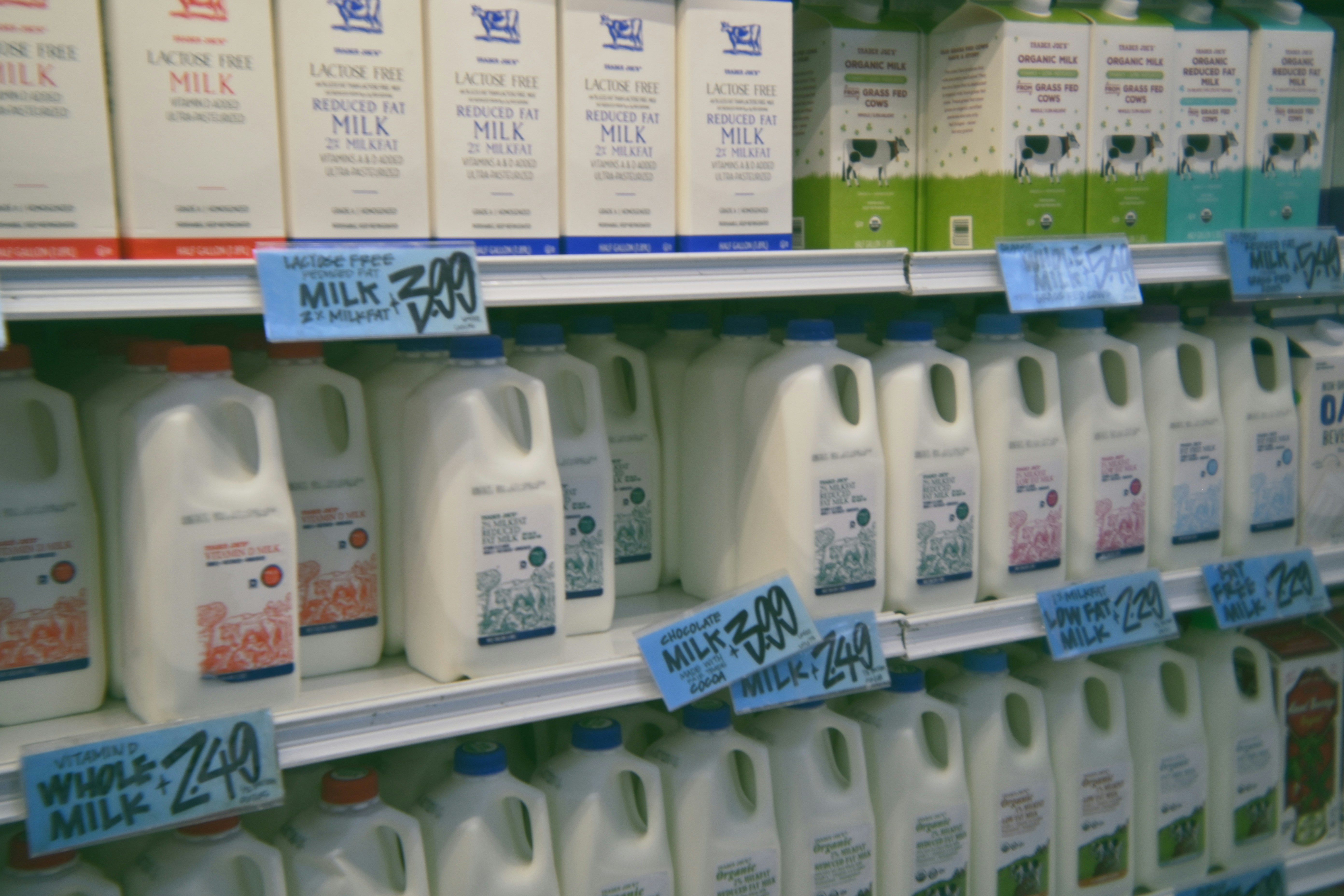
We go through a lot of milk in this house. Four people, cooking from scratch most nights, kids who drink it with lunch and dinner and sometimes, inexplicably, both — we’re buying it every few days without much thought. For a while I grabbed whatever was on sale and moved on. Then my wife pointed out, not for the first time, that we’d become deliberate about almost every other kind of packaging in the kitchen — the glass jars, the mesh bags, the dish soap in a refillable bottle — and somehow milk had entirely escaped our attention.
So I looked into it. What I found wasn’t the clean answer I expected.
Glass is the obvious answer. It’s also wrong — mostly.
My instinct was that glass was clearly better. Natural material, endlessly recyclable, looks nicer in the fridge. I’d have said glass without hesitating if someone had asked me at the grocery store. The research, though, is considerably less impressed with single-use glass than I was.
Lifecycle assessments — studies that calculate the total environmental cost of a material from raw extraction through manufacturing, transport, use, and what happens after you throw it out — put the carbon footprint of a single-use glass milk bottle at roughly 265 grams of CO2, compared to around 101 grams for a plastic jug and just 32 grams for a paper carton. The reason is almost entirely weight. Glass is heavy. A glass bottle is significantly heavier than the equivalent plastic or cardboard container, which means every delivery truck carrying glass milk is burning meaningfully more fuel to move the same amount of product. The manufacturing process is also energy-intensive in a way that cardboard simply isn’t.
This surprised me more than it probably should have. We associate glass with doing the right thing — it feels substantial, permanent, real in a way that plastic doesn’t. But if it’s being used once and recycled, that physical weight works against it at every step of the supply chain.
The recycling story is more complicated than the bin makes it look
Here’s where the plastic jug makes a better case for itself than its reputation suggests — and where cartons quietly fall apart.
HDPE plastic, which is what most milk jugs are made from, is one of the more widely accepted materials in curbside recycling programs. It gets picked up, it gets processed, the number makes sense. What isn’t widely understood is that plastic milk jugs are almost never recycled back into new food-grade containers. The sanitary requirements make that impractical. Instead they get “downcycled” — turned into plastic lumber, drainage pipe, park benches. Better than landfill, genuinely. But the next milk jug still gets made from virgin petroleum. The recycling loop doesn’t actually close.
Cartons — Tetra Pak-style packaging — have an even stranger relationship with recycling. A standard milk carton is made of six layers of material: cardboard, polyethylene, and aluminum, fused together in a laminate that is genuinely difficult and expensive to separate. Globally, only about 28% of cartons get recycled, and a significant portion of that figure depends on specialized facilities that most municipalities simply don’t have. In many parts of the United States, the carton in your recycling bin goes straight to landfill regardless of what the label says. The fact that cartons have the lowest production carbon footprint of the three — that 32-gram figure I mentioned — is real, but it matters considerably less if the container isn’t actually being recycled at the end.
Glass, by contrast, genuinely can be recycled back into new glass indefinitely without degradation. Whether that happens depends on your local infrastructure, and only about 31% of glass containers in the US actually make it through the recycling process. But the loop, at least, is a real loop.
The version of glass that actually wins
There’s a form of glass packaging that clears every other option decisively — and it’s not the kind you buy at a chain grocery store.
Refillable glass bottles, used through a local dairy or a doorstep delivery service that takes them back, wash them, and fill them again — that’s the scenario where glass becomes the clear winner. Research suggests that a refillable glass bottle only needs to make five to ten round trips before its total environmental impact is lower than a plastic jug. At thirty trips, which is entirely realistic for a well-run deposit scheme, it’s even competing with cartons on carbon footprint, which is remarkable given how heavy glass is.
The critical word, though, is refillable. The bottle has to go back. If it ends up in the recycling bin or the trash rather than being returned to the dairy, the calculation collapses entirely and you’re back to single-use glass with all its weight-related costs. The system only works if the system actually works.
We live in the Seattle suburbs, where a few local dairies do run glass-return programs — Dairy Farmers of Washington, Twin Brook Creamery, a couple of others. We haven’t switched yet. I’ve looked into it more than once and the logistics, at least from where we currently shop, haven’t lined up. If we sorted that out, it’s where I’d want to be.
What we actually do
We mostly buy in cartons, knowing full well that there’s a real chance our local recycling facility doesn’t process them. That’s a genuinely uncomfortable thought to sit with — buying the container with the lowest production footprint and then watching it likely go to landfill anyway. I don’t have a clean resolution to that tension.
If you’re not near a local dairy with returns, and you want to do something useful with your carton habit, some areas have carton drop-off programs separate from curbside recycling — worth checking whether your city has one. And if you buy cartons and transfer the milk into glass bottles at home for the fridge, you get the pleasantness of glass storage without the supply chain weight problem.
We actually do this when the kids make a dent in the first half of a carton — the remainder goes into one of our glass bottles, which lives in the fridge door and gets refilled. It’s a small thing. It doesn’t change the container question, but it changes the experience of getting a glass of milk, which matters more than it probably should.
The honest answer
If you have access to a local dairy or delivery service with a genuine glass-return deposit program: use it, and use it consistently. That’s the best option by a clear margin, and it supports a local producer at the same time.
If you don’t: cartons have the lowest carbon cost to produce and ship, but check whether your municipality actually recycles them — if not, that advantage is largely theoretical. Plastic jugs are widely recycled in most places, but shallowly. Single-use glass from a supermarket shelf is the worst option for regular weekly shopping, despite being the one that feels most virtuous in your hands.
The container is one part of this. The farm it came from, and how far it traveled to reach you, probably matter just as much. But that’s a different question.
Sources
- Milk jugs, cartons or plastic bags — which one is best for the environment? — The Conversation
- Environmental Footprint of Milk Containers — San José Recycles
- Plastic or glass: a lifecycle assessment for pasteurized milk bottles — International Journal of Life Cycle Assessment, Springer
- The (Un)Sustainability of Tetra Paks — Recycle Utah
- Environmental impact study: cartons vs. reusable glass bottles — Packaging Europe
- Glass vs. plastic vs. aluminium — what is the most sustainable choice? — Tapp Water
What we use
Products mentioned in this article — affiliate links support this site at no cost to you.
The Dairy Shoppe Glass Milk Bottles with Lids (64 oz, 2-pack)
Heavy American-made glass with a silicone pour spout — good for decanting from a carton or storing from a local dairy
Half Gallon Glass Bottle with Airtight Lid
Simple, clean, dishwasher-safe — fits neatly in a fridge door