
Our SodaStream Ran Out of Gas, So I Finally Did the Math on Cans vs. Bubbles at Home
We still love Spindrift, but a SodaStream and a few squeezes of lime have replaced about half our canned sparkling water. Here's what that means for energy, garbage, and cost, plus how to keep the cylinder refilled.
Disclosure: This article includes affiliate links. If you buy through them, we may earn a small commission at no extra cost to you. We only share things we use ourselves or would honestly point a friend to. The article comes first, always.
Last week I pressed the button on our SodaStream and got nothing. No buzz, no hiss, just a sad little puff and a bottle of flat tap water. Our first CO2 cylinder had run out.
It made me realize how much that machine has become part of our routine. I love Spindrift, and that hasn’t changed. But without really planning it, we’ve cut our canned sparkling water by about half. So while I sorted out the refill, I finally looked into the question I’d been avoiding: is making sparkling water at home actually better than buying cans?
Lime Changed Everything
What kept us away from SodaStream for so long was the flavors. Every syrup and flavor drop we found was either artificially sweetened or listed “natural flavor,” which tells you a lot less than it sounds. Under FDA rules, a natural flavor only has to start from a plant or animal source. After that it can be heavily processed, and according to the Environmental Working Group, it can include solvents and preservatives that never show up on the label. Spindrift is the opposite: sparkling water and real squeezed fruit.
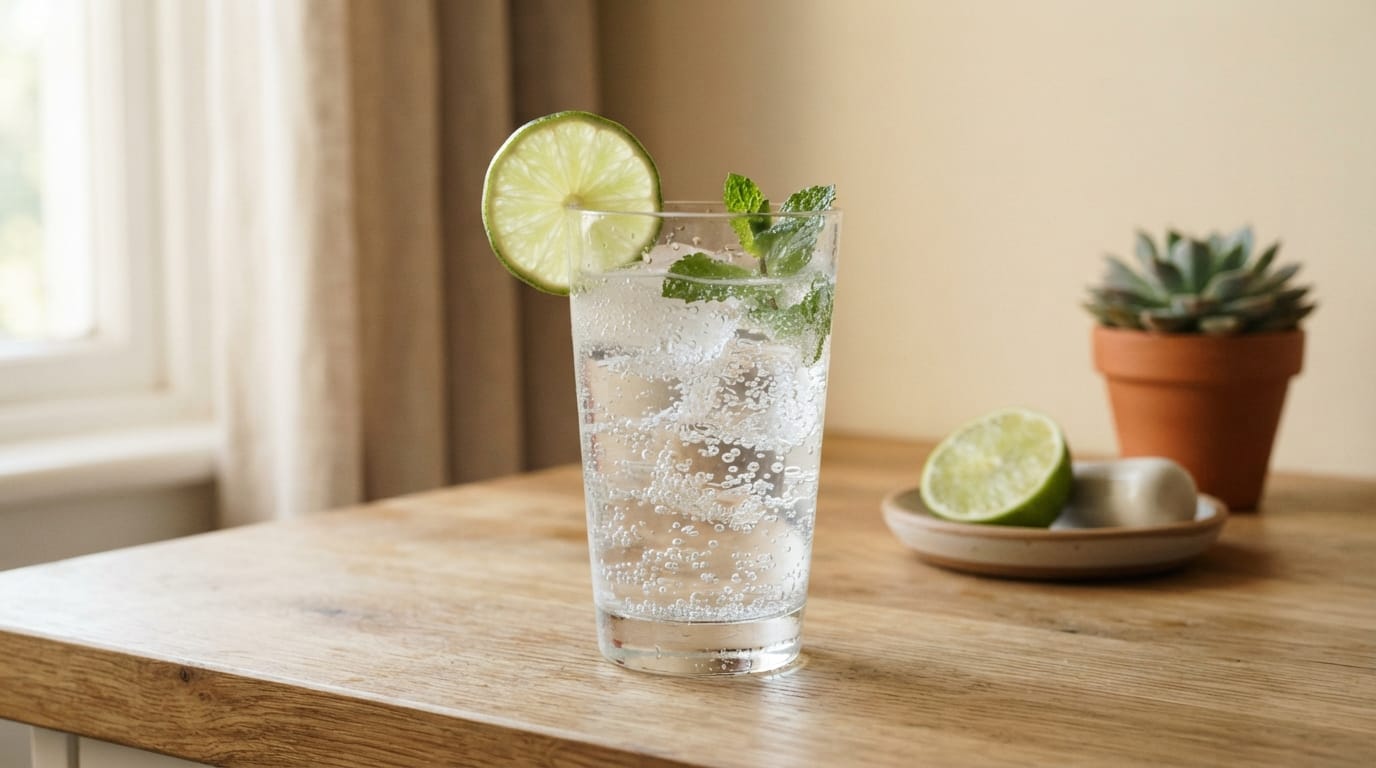
So I tried the simplest thing possible. Carbonate plain tap water, cut a lime, squeeze in a few wedges. It’s fresh, a little tart, and I like it as much as anything in a can. The spent lime goes in the compost.
On days when we’re out of fresh limes, a bottle of Lakewood Organic Pure Lime Juice in the fridge does the job. The only ingredient is organic lime juice. Lemon, cucumber and mint, a few frozen berries, or a slice of fresh ginger all work too. (Add them after carbonating, not before.)
The Can Is the Footprint
According to the Aluminum Association’s life-cycle study, a single 12-ounce can in North America accounts for about 97 grams of CO2-equivalent, from making the metal through disposal. That’s just the container.
Aluminum is one of the better packaging materials out there (we compared it to glass and plastic here). The average US can is about 73% recycled metal, and the industry has cut the carbon intensity of can-making by more than 40% since the early ’90s. The problem is that a lot of cans never come back. In 2023, the US can recycling rate fell to 43%, the lowest in decades. Some of that is people not recycling, and some gets lost at sorting facilities. (More on why in our recycling bin article.)
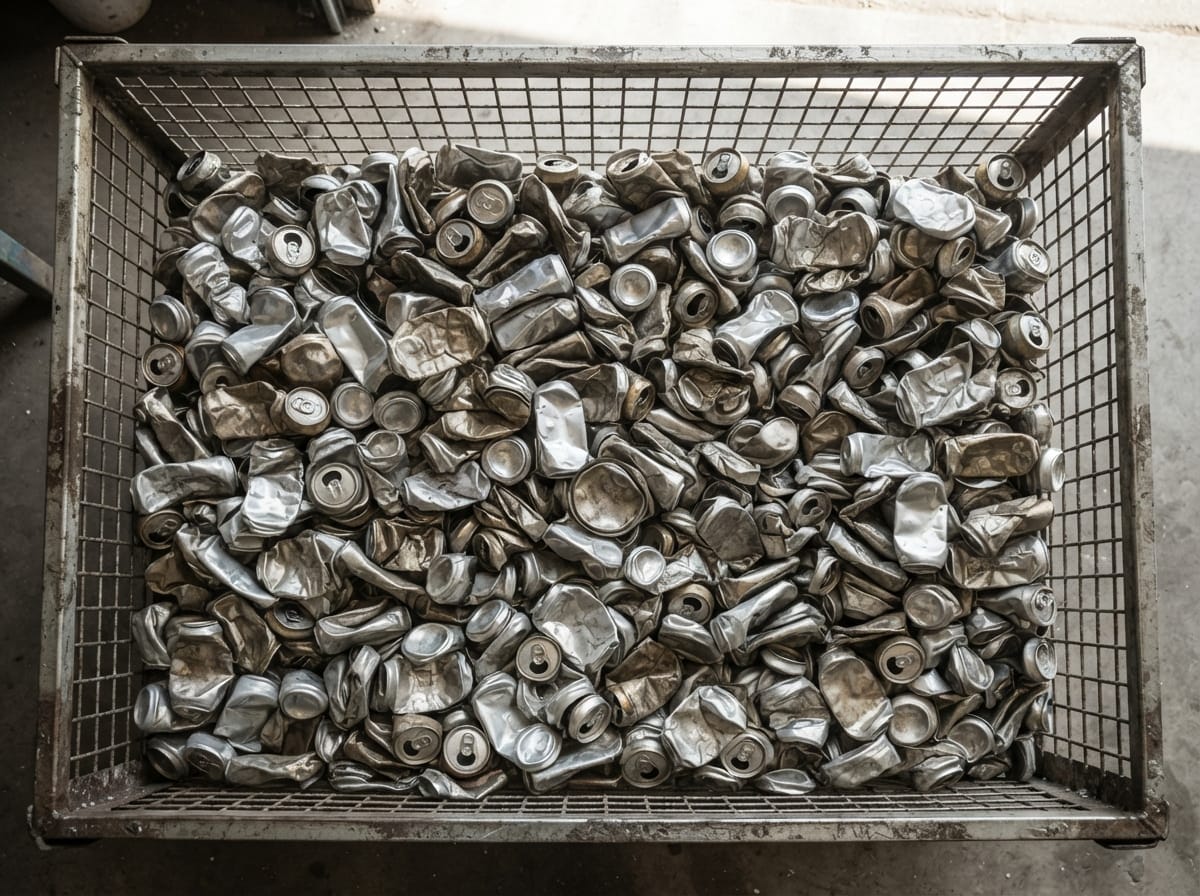
Then there’s the weight. A case of sparkling water is mostly water, trucked from a bottling plant to a warehouse to a store to our pantry. Our faucet already has water in it.
One Cylinder vs. 169 Cans
A SodaStream CO2 cylinder makes up to 60 liters of sparkling water, about 169 twelve-ounce cans’ worth. When it’s empty, you exchange it, and SodaStream cleans, inspects, and refills it. The same steel cylinder goes around and around.
| 169 cans | 1 SodaStream cylinder | |
|---|---|---|
| Thrown away | 169 cans + about 14 cardboard boxes | Nothing; the cylinder is refilled |
| Packaging footprint | About 16 kg CO2e (cans alone) | One cylinder shipped back and forth |
| Water shipped | About 60 kg (132 lb) | None; it comes from the tap |
| Likely landfilled (at 43% recycling) | About 96 cans | Just lime peels, which we compost |
One honest caveat: I couldn’t find an independent life-cycle study of SodaStream itself, only the company’s own claims. Making the CO2, shipping cylinders, and building the machine all have a footprint. But when the choice is shipping 169 cans of water or refilling one reusable cylinder at the tap, it’s hard to see the cans winning.
For a family that drinks 12 cans a week and swaps half for homemade, that’s about 312 cans a year that never get bought. That’s roughly 4 kg of aluminum and 30 kg of CO2e, and at today’s recycling rate, about 178 cans that would have ended up in a landfill. All of it is replaced by fewer than two cylinders.
It also costs less. An exchange cylinder runs about $15 to $20, which works out to around a dime per can’s worth of bubbles. Spindrift usually lands somewhere between 75 cents and a dollar a can.
Getting the Cylinder Refilled
If you’re staring at an empty cylinder like we were:
- Check which kind you have. Newer machines like the Terra use the pink Quick Connect cylinder. Older ones use the blue screw-in cylinder. They aren’t interchangeable.
- Swap it in store. Target, Walmart, and many grocery and hardware stores will exchange an empty cylinder for a full one at the exchange price.
- Or swap it by mail. SodaStream’s online exchange ships a full cylinder with a prepaid label for the empty. Send it back within 60 days or they charge an extra fee.
- Keep a spare. With two cylinders, one is always full. We’re adding a second so we never get caught with flat water again.
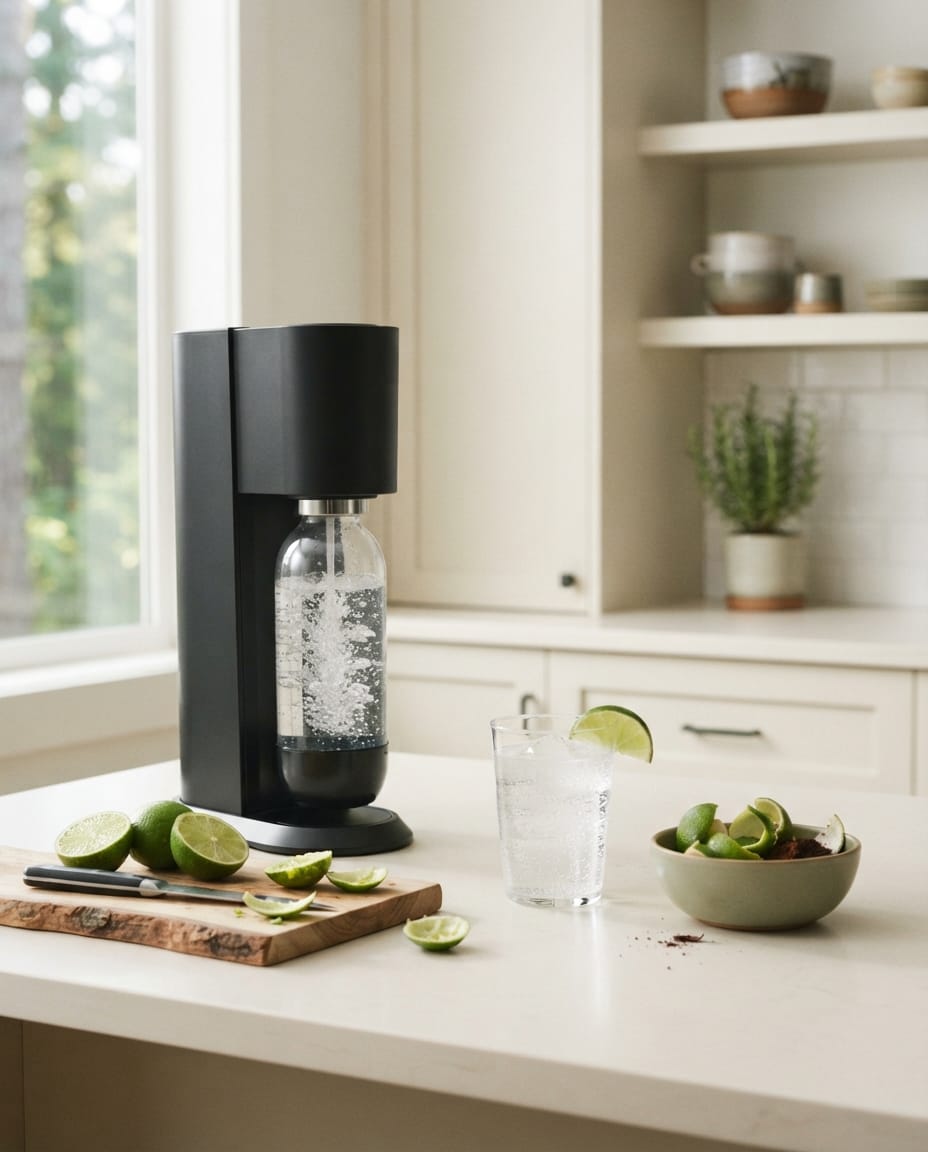
Ours is the Terra, the simplest model they make: no electricity, just a button you press a few times depending on how fizzy you like it. Its bottles are reusable plastic. If you’d rather avoid plastic, SodaStream’s Duo model also takes glass carafes.
Whatever machine you look at, the one thing we’d avoid is anything that runs on single-use flavor pods or sachets. That just trades the can for a different piece of trash.
And if a machine isn’t for you, buying cans and actually rinsing and recycling every one still beats the national average by a mile.
What We’re Still Figuring Out
We’re not giving up Spindrift. There’s something about a cold can at the lake or in a cooler that a glass from the kitchen doesn’t match. We still buy it, and we recycle every can.
What surprised me was how little effort the swap took. We didn’t set a rule or a goal. We found a homemade version we actually liked, and the cans slowly became the treat instead of the default. Now I just need to exchange the next cylinder before it runs out.
Sources
- Aluminum Can Life Cycle Assessment Summary (2021) — The Aluminum Association
- Carbon Footprint of US Aluminum Can Production Down 40% Since the 1990s — The Aluminum Association
- Aluminum Beverage Can Recycling Rate Hits Lowest Point in Decades — Waste Dive
- Is SodaStream Actually Better for the Environment? — MEL Magazine
- Everything You Need to Know About Your CO2 Cylinder — SodaStream
- What Is an Online CO2 Exchange and How Does It Work? — SodaStream US Support
- Natural vs. Artificial Flavors — Environmental Working Group
- 21 CFR 101.22: Definition of Natural Flavor — Cornell Legal Information Institute
- Soda and Sparkling Water Makers Compared — Front Desk Review
What we use
Products mentioned in this article — affiliate links support this site at no cost to you.
SodaStream Terra Sparkling Water Maker
The simple, no-electricity machine we use at home
SodaStream Quick Connect CO2 Cylinders (2-pack)
Spare cylinders for the Terra, with a return program for empties